Introduction
Forecourt retailers face the same retail crime challenges as the rest of the convenience store industry, but they also have the added burden of fuel theft from their sites. Fuel theft has been a long standing issue that forecourt retailers have successfully managed over a number of years
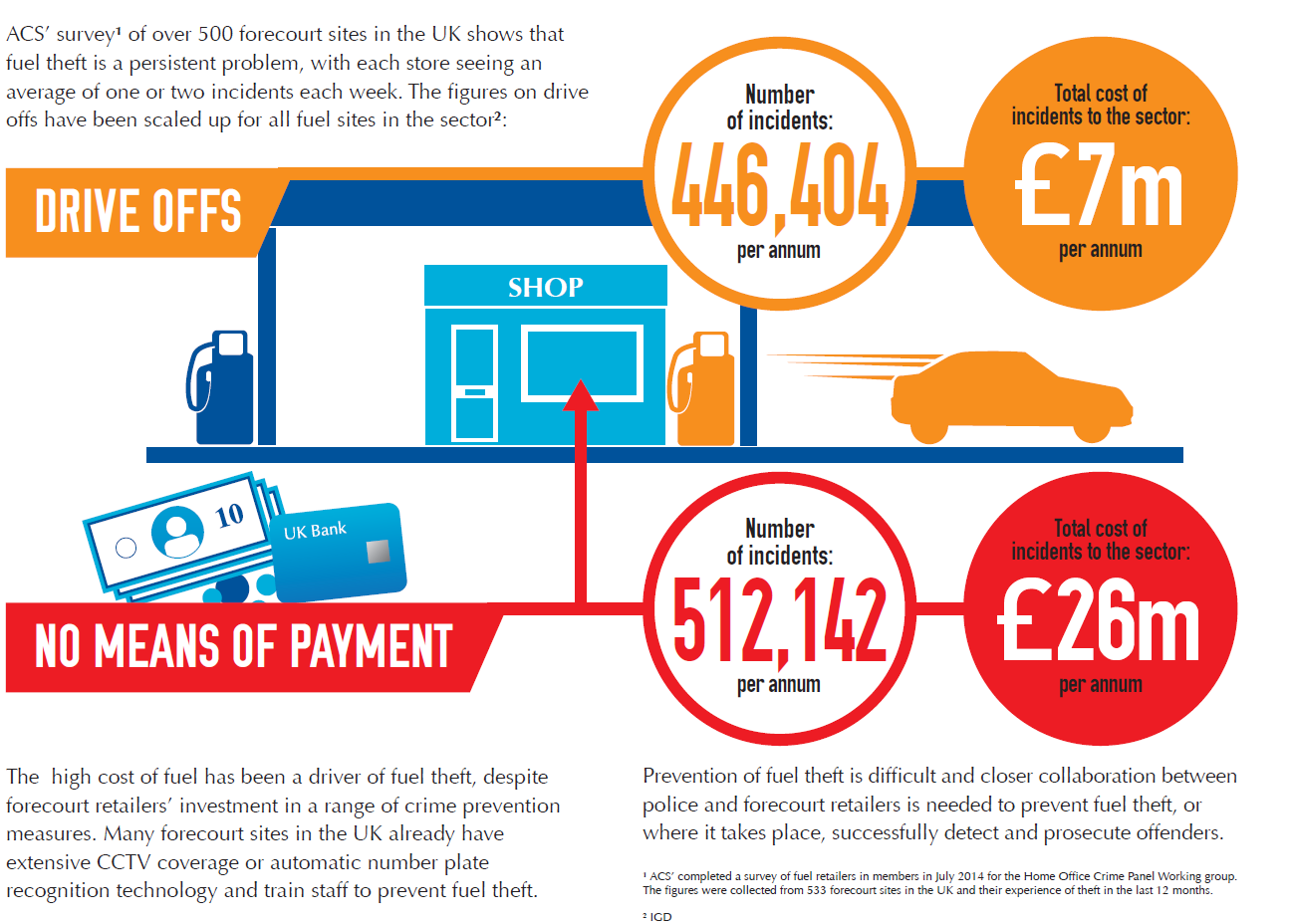
They have worked with the police and installed numerous crime prevention mechanisms to reduce fuel theft. Fuel theft is primarily made of two types offences:
- Drive Offs
Where the customer fills their vehicle up with fuel and drives straight off the forecourt not making an effort to pay. The police often refer to this as bilking. - No means of payment
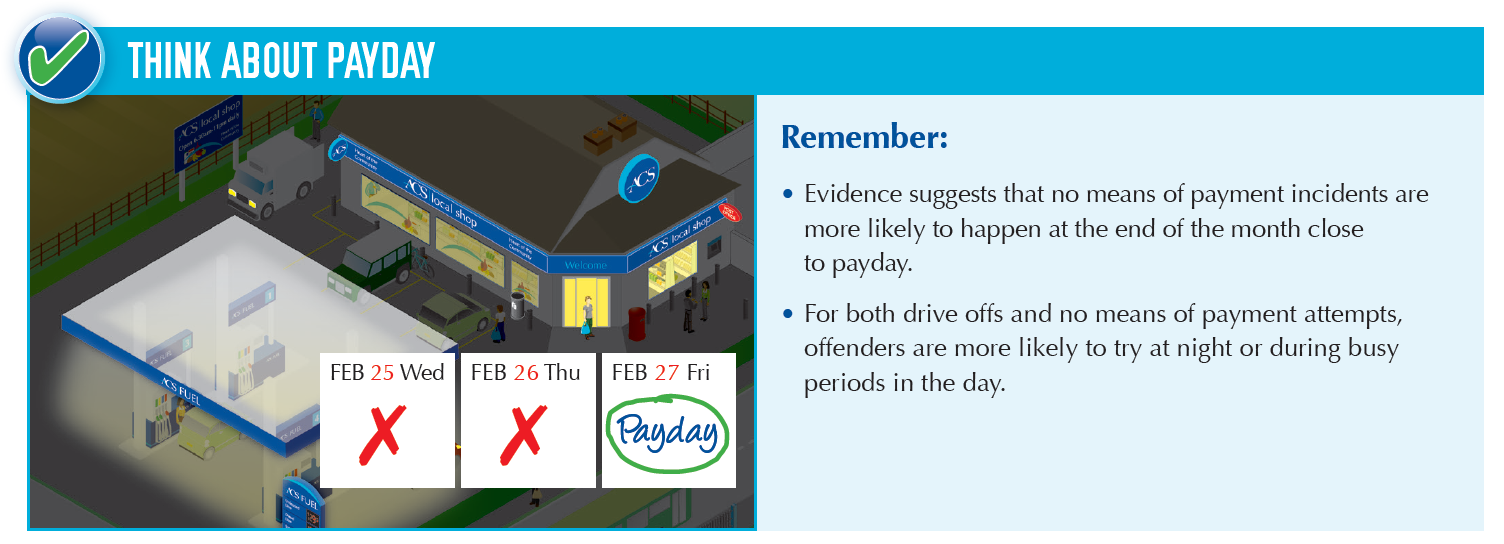
Where the customer fills their car up, goes to pay and claims they have forgotten their wallet/purse and cannot settle the bill. This may be genuine, but could be one of a number of offences by the same individual and can be classed as a criminal offence of fraud.
Additionally there is also the threat of bulk fuel theft from storage tanks.
Fuel Theft Statistics
Preventing Drive Offs
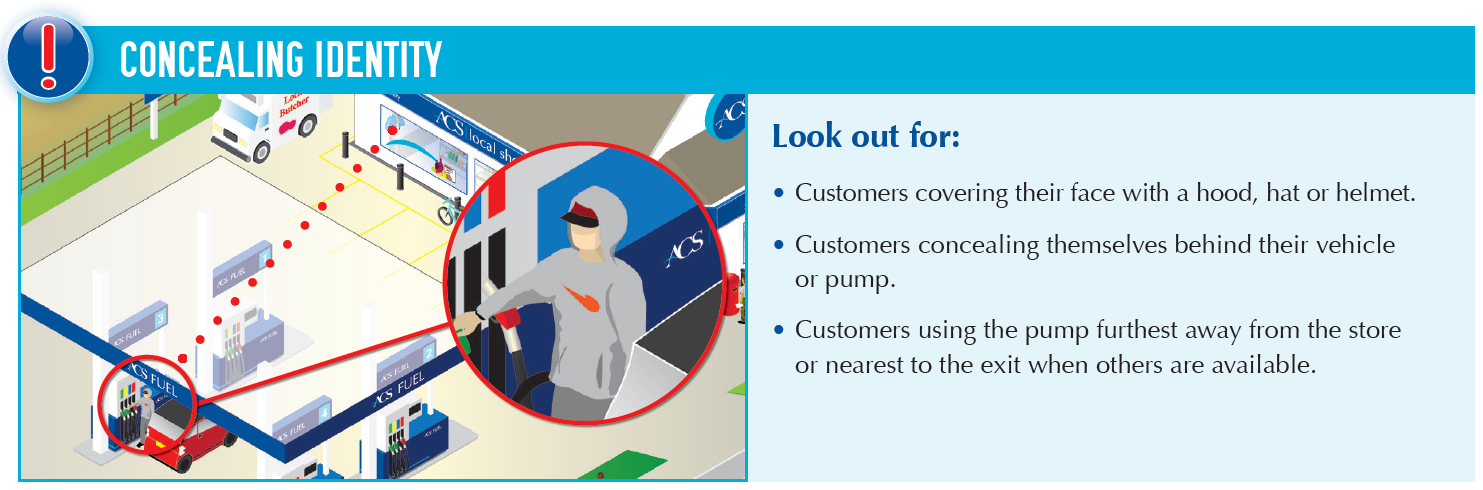
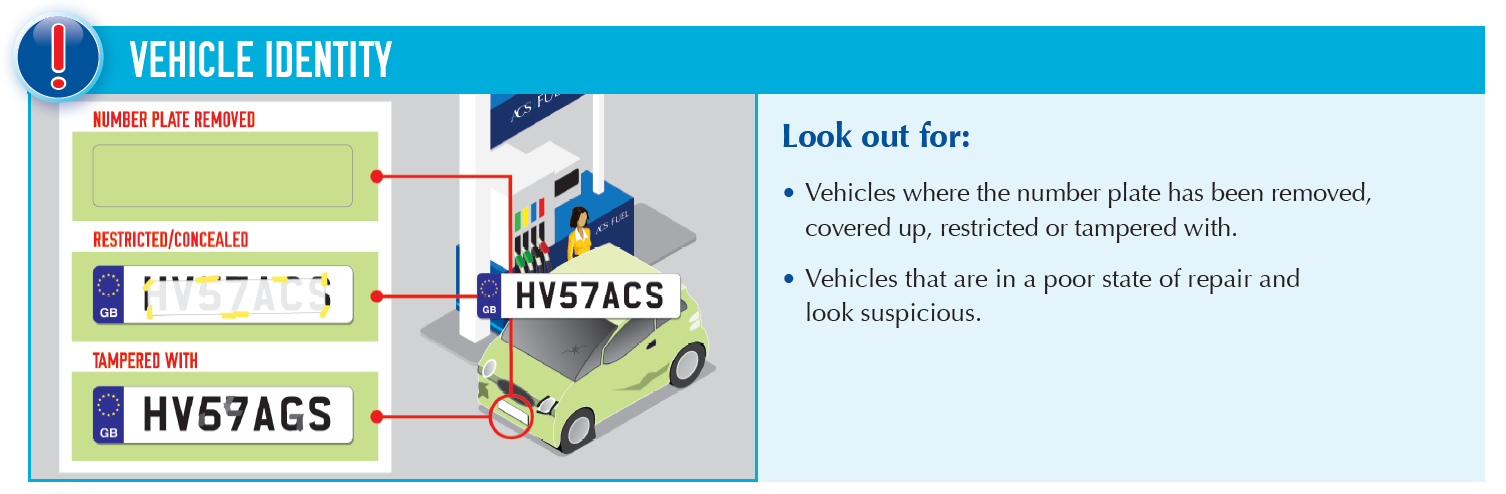
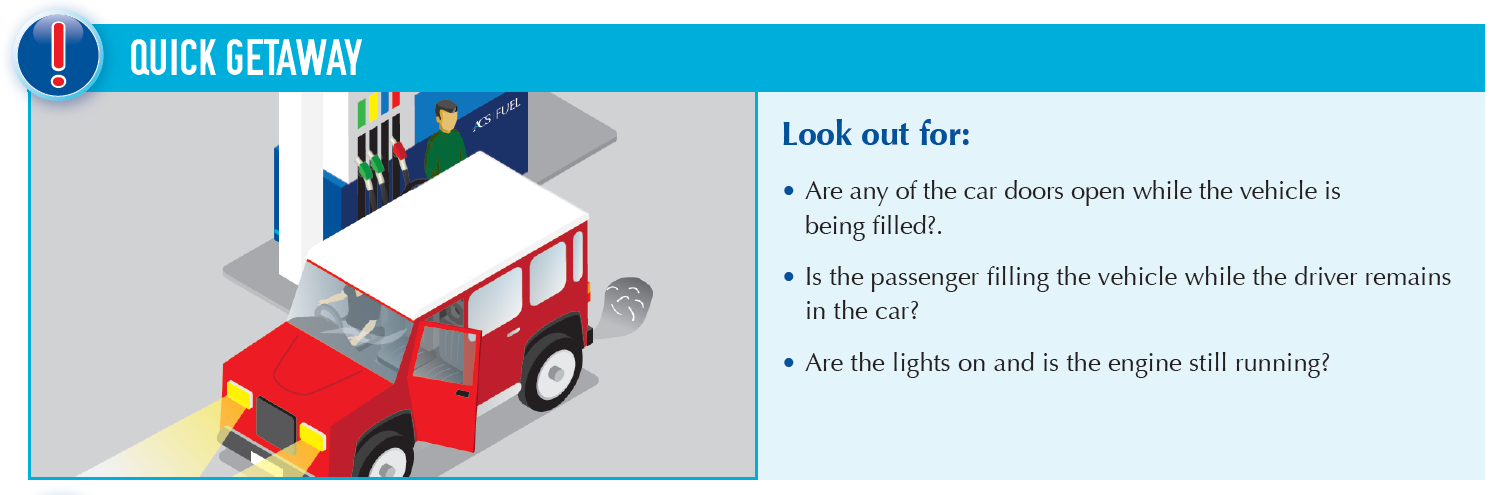
Fuel thieves have three priorities when committing an offence which can often give them away; concealing their identity, concealing the identity of their vehicle and making a quick getaway.
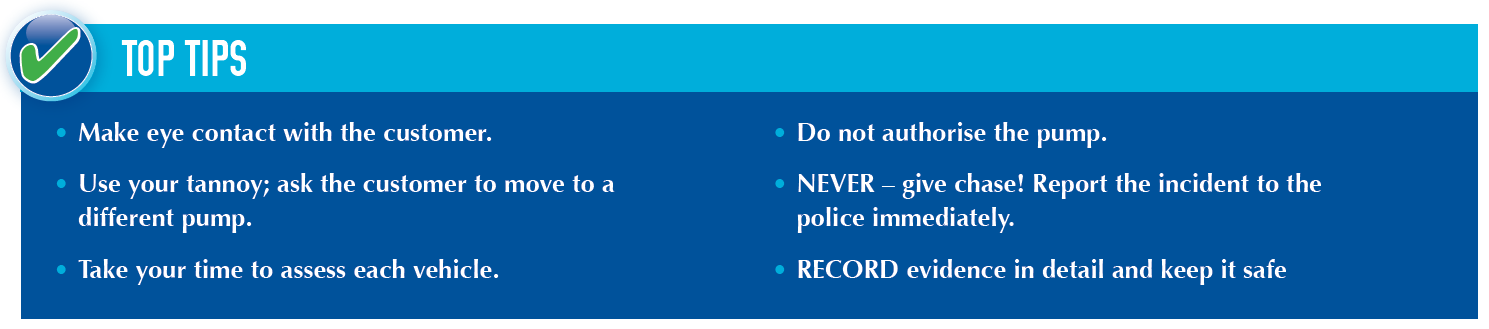
Forecourt attendants should be conscious of these behaviours and when necessary not authorise the pump or use the tannoy system to deter offenders.
Preventing and Managing No Means of Payment
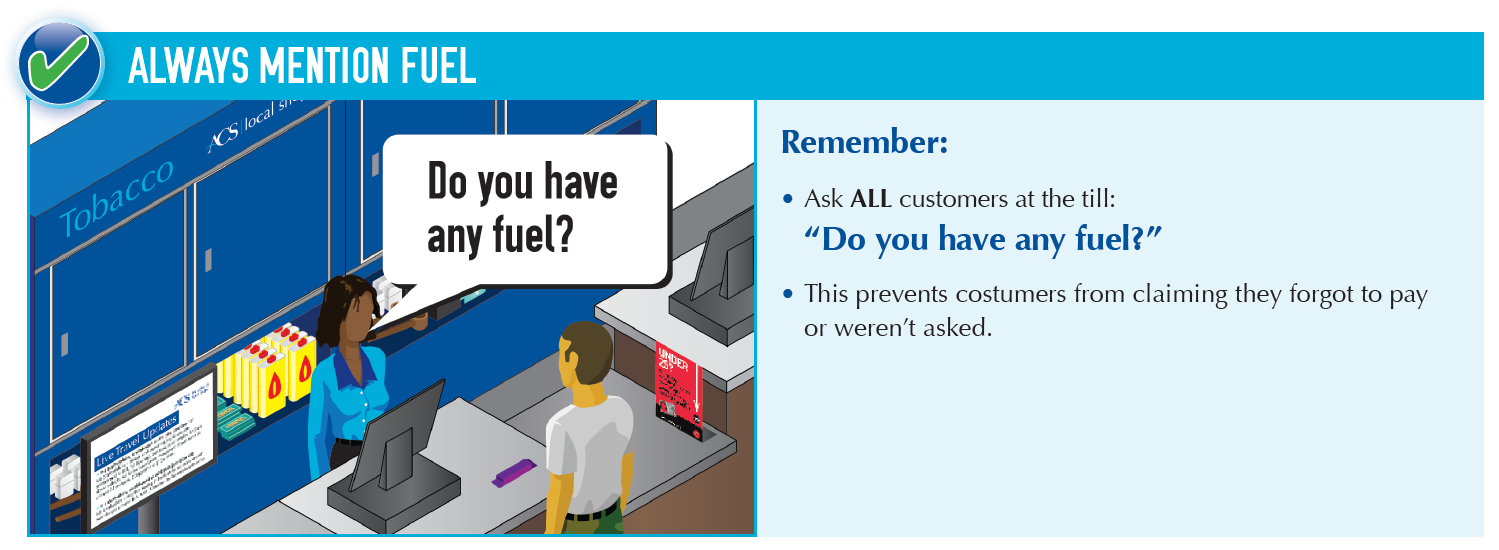
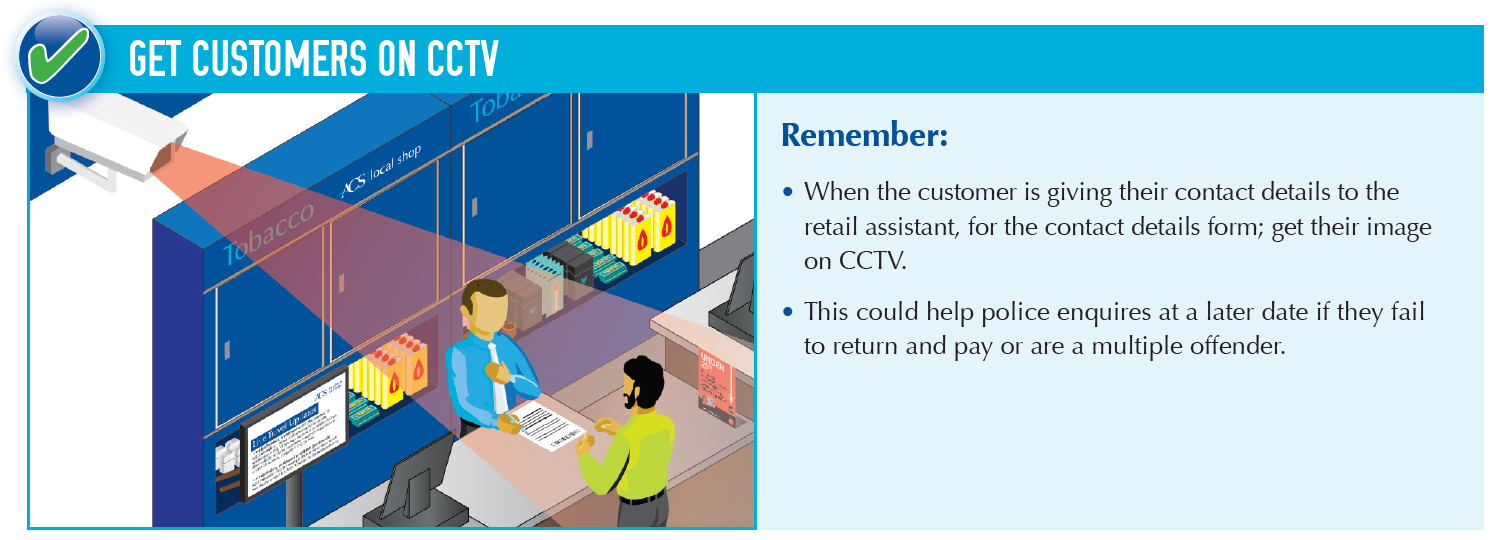
Sometimes customers genuinely forget to bring payment with them for fuel, but as long as you get the right information from them this should reduce the risk of non-payment. You should ensure you get the customer’s: name, address and verify their car registration number.
Your no means of payment procedure and documentation should be well established amongst all staff and easily accessible from the till. It is advisable that you adopt industry standard
procedures provided by organisations such as BOSS –the British Oil and Security Syndicate’s Payment Watch debt recovery scheme or the agreed system used by either your fuel supplier or local police force.
Follow these top tips for preventing and managing no means of payment:
Other Industry Resources
ACS Crime Report
ACS (the Association of Convenience Stores) represents 33,500 local shops across the UK and produces an annual Crime Report on crime in the convenience sector. The ACS Crime Report includes general crime prevention guidance for convenience store retailers including shop theft, violence and verbal abuse, robbery and burglary and working in partnership with the police.
For more information: www.acs.org.uk/research/crime-report/
Report Fuel Theft
What number to dial when calling the police following a bilking.
When a bilking or fraud has happened, and the offenders have driven off, the most appropriate number to dial will usually be 101 which will connect to the local police, and NOT 999, as immediate police attendance to take crime details is not required.
In a genuine emergency call 999. A genuine emergency is where a crime or serious incident in progress, where there is a serious risk of injury or a risk of serious damage to property.
Tackling Retail Crime Together
Tackling Retail Crime Together is a jointly managed website by the British Retail Consortium and Association of Convenience Stores bringing together best practice guidance from across the retail industry to prevent retail crime. The website includes case studies from retailers working closely with the police and the latest guidance and information from the Ministry of Justice and Home Office on anti-social behaviour powers, shop theft guidance and out of court disposal procedures.
For more information: www.tacklingretailcrimetogether.co.uk
You can download a PDF of the guidance here.